
Introduction
Every once in a while, a word slips back into public conversation with the subtlety of a bulldozer. Fascisterne—the Danish plural for “the fascists”—is one of those heavy, historically charged terms that refuses to stay in the past. You hear it in late-night debates, see it tossed around in headlines, and even find it whispered (sometimes dramatically, sometimes carelessly) in online comment threads. But what do we really mean when we talk about fascisterne? And perhaps more importantly: why does the concept still matter so much today?
This article takes you on an imaginative yet grounded deep dive into the world of extremist ideologies associated with fascism, the psychological pull behind them, and the echoes still bouncing inside modern culture. Along the way, we’ll unpack common misconceptions, explore the roots of these movements, and dive into how societies can respond without losing their grip on democracy.
So buckle up—it’s going to be a long, winding, and eye-opening ride.
The Enigmatic Rise of Fascisterne
Where It All Began
When we look back at the early 20th century, the world was shaken—not lightly rumbling, but outright trembling—by massive economic upheaval, wounded national pride, and social division. Out of those fractures emerged movements built around ultra-nationalism, strict social hierarchy, charismatic leaders, and a rejection of democratic norms. You can practically picture the setting: crowds gathering, flags waving, rhetoric rising.
At that time, fascisterne weren’t just political actors; they were a cultural force, reshaping nations and rewriting entire moral codes. While it’s tempting to imagine them as comic-book villains with obvious warning labels slapped across their foreheads, reality was far messier. They offered certainty when people felt lost, direction when the world seemed directionless, and identity when societies were fragmenting.
In a way, that’s the real danger: their promises felt comforting.
The Ideological Framework (If We Can Call It a “Framework”)
Trying to pin down fascism with rigid definitions is a little like trying to catch fog with a fishing net—good luck with that. But there are some shared characteristics you’ll find across fascisterne movements:
-
Ultra-nationalism:
A hyper-intense love of nation that often crosses the border into exclusion, xenophobia, or racial superiority. -
Reverence for Authority:
Strong, centralized leadership—usually embodied by a charismatic figure who’s painted as the savior of the nation. -
Suppression of Dissent:
Whether subtly or through brute force, fascist groups crack down hard on opposition. -
Glorification of Violence:
Not just acceptance—celebration. Violence becomes a “solution,” not a problem. -
Mythologized Past:
“Make the nation great again” didn’t start recently—it’s a classic move. Fascisterne often create an imagined golden age to justify their actions.
As contradictory as some of these pillars may seem (order through chaos, liberation through control), they form the backbone of extremist movements that shaped—and warped—history.
Why the Fascisterne Mindset Still Exists Today
The Psychology Behind the Movement
You might wonder: “Why would anyone buy into this?” Well, humans—no matter how advanced our tech becomes—share a hardwired desire for belonging, identity, and predictability. When life feels uncertain, complex, or downright frightening, simplistic explanations can seem like a warm blanket on a cold evening.
People drawn into fascist thinking often experience:
-
Economic anxiety
-
Fear of cultural change
-
Loss of social status
-
Identity confusion
-
A craving for community
Throw in a persuasive leader who talks in absolutes—never mind whether they actually make sense—and suddenly you’ve got a recipe powerful enough to attract millions.
The Modern-Day Echoes
Although the most infamous fascisterne of the 20th century are long gone, their ideological fingerprints show up in all kinds of modern spaces:
-
Hardline political movements
-
Radical online communities
-
Authoritarian-leaning organizations
-
Groups that romanticize past regimes
-
Conspiracy-based echo chambers
Sometimes these echoes shout; sometimes they whisper. But they’re unmistakably present.
The digital age, ironically, has made it even easier for fringe ideologies to flourish. Algorithms feed confirmation bias like a buffet, and small groups can suddenly seem massive when they congregate online. While most people brush off extremist ideologies as “fringe stuff,” their influence can ripple outwards in surprisingly subtle ways.
The Cultural Aura of Fascisterne
Symbolism and Mythology
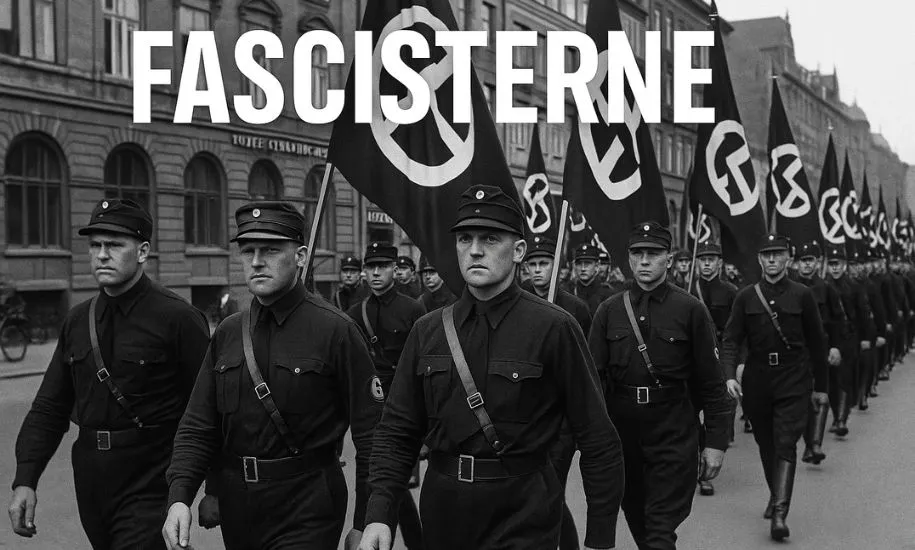
Extremist movements know the power of symbolism. Think uniforms, chants, rigid ceremonies, stylized gestures. Whether we like it or not, fascisterne historically excelled at aesthetics. They built an entire cultural identity through symbols, myths, and propaganda.
Some common themes include:
-
Idealized warriors
-
“Pure” national identity
-
Romanticized historical narratives
-
Military precision
-
Heroic sacrifice
These aren’t accidental flourishes—they’re psychological hooks.
Stories, Movies, and Pop Culture
Strangely enough, the image of the fascist has become a fascinating (and often terrifying) archetype in modern storytelling. From dystopian films to novels to video games, fascisterne remain a powerful symbol of oppression and dystopia.
But here’s the twist: pop culture sometimes oversimplifies them. When fascists are depicted purely as exaggerated villains, audiences may fail to recognize how real-world extremist groups take root—quietly, insidiously, and often under the guise of “protecting” something.
It’s also why understanding them—not just condemning them—is crucial.
How Democracies Push Back
1. Education and Awareness
The more people understand history, the less likely they are to repeat it. (Or so we hope!) Schools, museums, documentaries, and public conversations all help inoculate societies against extremist ideologies.
2. Free but Responsible Speech
Democracies walk a tightrope here. On the one hand, shutting down speech creates martyrs and underground movements. On the other hand, letting harmful ideologies spread unchecked is equally risky.
Balance is key.
3. Economic Stability
When people feel secure, extremism loses much of its magnetic pull. Poverty and instability often act as catalysts for radicalization.
4. Strong Institutions
Independent courts, fair elections, and a free press form the antidotes to authoritarian creep. Without them, societies weaken from the inside out.
5. Community Building
People join extremist movements because they’re searching for belonging. So offering healthier alternatives isn’t just idealistic—it’s strategic.
Five Myths About Fascisterne—Busted
Myth #1: Fascism is always obvious.
Not true. Modern extremist movements often disguise their intentions with sanitized language and polished branding.
Myth #2: It can only happen in weak countries.
History shows that strong nations with long democratic traditions can fall into authoritarianism if they let their guard down.
Myth #3: Only uneducated people join extremist groups.
Completely false. Many leaders were intelligent, well-read, and highly strategic.
Myth #4: Fascism disappeared after WWII.
If only! Its ideas persist—just in new forms.
Myth #5: It’s purely political.
Nope. It’s cultural, psychological, and emotional as well.
Fascisterne in Public Discourse Today
Why the Term Gets Misused
People often throw around the word “fascist” to describe anything authoritarian, annoying, or disagreeable. A strict teacher? A controlling parent? A boss who micromanages? Sure, let’s call them fascists—why not!
But this casual usage dilutes the term. It disconnects it from the historical weight and real-world dangers of extremist ideology. When everything is fascism, nothing is.
The Danger of Overuse
Overusing the term creates two big problems:
-
It trivializes historical atrocities.
-
It prevents constructive conversation.
If labeling someone “fascist” replaces actual dialogue, then the word becomes an emotional sledgehammer instead of a meaningful concept.
How to Identify Extremist Rhetoric (Without Becoming Paranoid)
Here’s a practical checklist for spotting red flags, whether in a speech, video, or group message:
-
Us vs. Them framing:
The world is split into pure patriots vs. corrupt enemies. -
Glorification of force:
Violence is portrayed as heroic or necessary. -
Appeals to a mythical golden age:
“We must reclaim what was lost!” -
Demonization of minorities:
Fear-based narratives targeting specific groups. -
Disdain for democracy:
Institutions are depicted as weak or corrupt. -
Charismatic leader syndrome:
One figure is portrayed as the nation’s savior.
If you see all six in the same place? Yeah… run.
FAQs About Fascisterne
1. What does “fascisterne” mean?
It’s the Danish plural form of “the fascists,” typically referring to extremist groups or ideologies aligned with fascism.
2. Are fascisterne only a historical phenomenon?
Not exactly. While classic fascist regimes belong to history, their ideological descendants still appear in modern movements.
3. How do extremist ideologies spread today?
Mostly through online platforms, charismatic influencers, misinformation loops, and communities driven by fear or identity loss.
4. What can individuals do to combat extremist ideas?
Stay informed, support democratic institutions, encourage open dialogue, and promote social inclusion.
5. Why do people still get drawn into extremist mindsets?
Because these ideologies offer simple answers to complex problems—and humans love simplicity when they’re scared or overwhelmed.
Conclusion
Understanding fascisterne isn’t just about studying history; it’s about recognizing how extremist ideologies morph, adapt, and reappear in new guises. These movements thrive on fear, division, and uncertainty—conditions that are, unfortunately, timeless. But here’s the encouraging part: societies have learned, grown, and developed a whole toolbox of strategies to prevent such ideologies from taking root again.
By staying aware, nurturing strong communities, and supporting democratic norms, we can keep extremist thinking from worming its way into mainstream culture. The shadows of the past don’t have to dictate the future—unless we let them.
In the end, understanding the fascisterne isn’t about fueling fear; it’s about shining light where darkness once ruled.
If you’d like, I can also provide a PDF version, rewrite it in a different style, expand it further, or optimize it for SEO even more!
